
Everyday self-care
Washing, deodorant, hair care, shaving and getting ready - with visual steps that can be adapted to ability and preference.
Meet Buddy: a picture-led, touch-first daily living companion, designed around the routines, choices and support that matter to an individual.
Helping make everyday steps more understandable - from brushing teeth and choosing clothes to difficult conversations about personal care.
Actual development interface preview · Layout and features continue to evolve
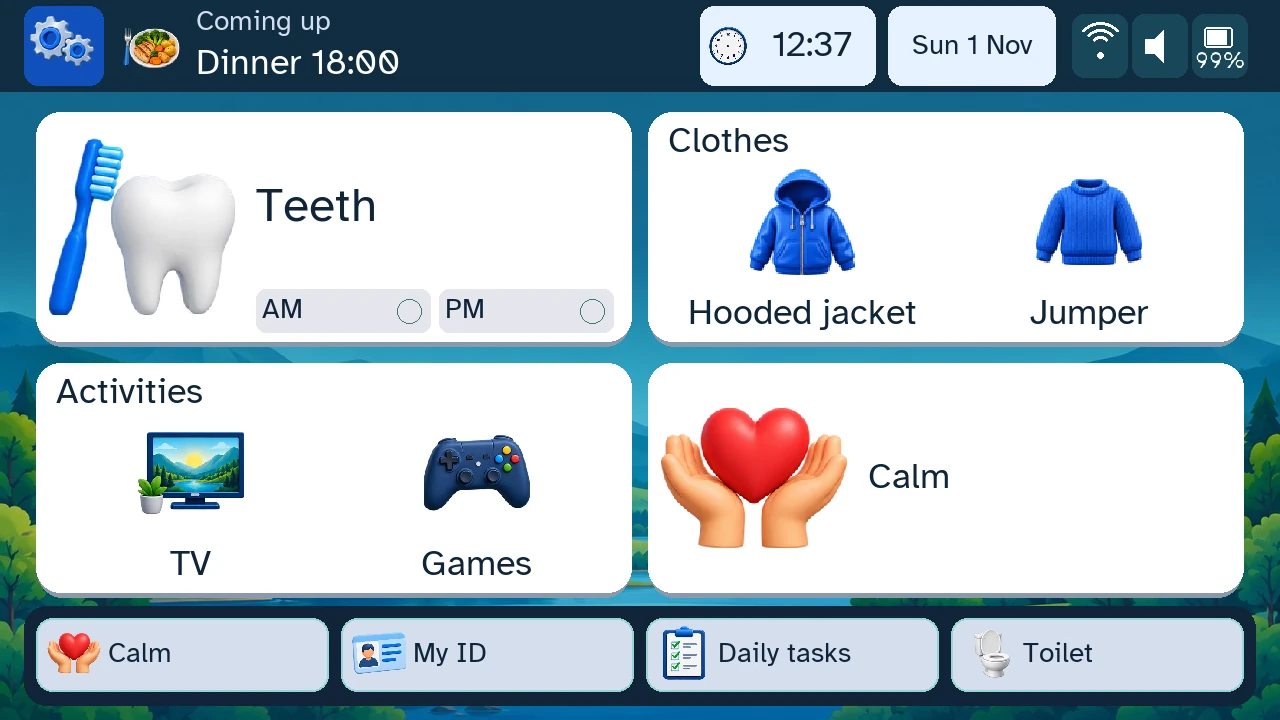
An ordinary day can involve dozens of decisions and transitions. For someone who finds sequencing, sensory demands or unexpected changes difficult, those tiny tasks can become overwhelming.
Buddy explores how a predictable visual environment and personalised support can break those moments down. Its guided routines are called LifeFlows: steps that can be used, repeated and adapted without expecting everyone to follow the same sequence or level of assistance.
Getting up, using the toilet, washing, getting dressed, brushing teeth, preparing for bed - LifeFlows can organise familiar tasks with clear pictures and manageable instructions.
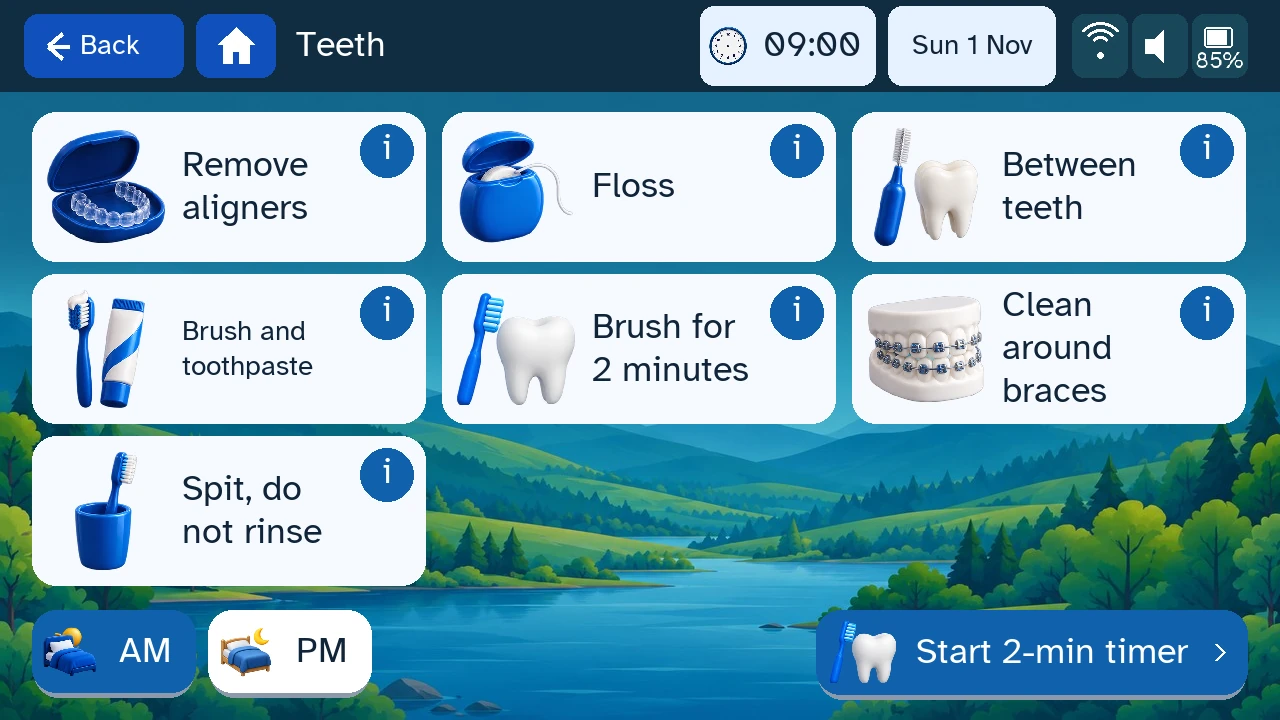
Good prompts can help someone approach private, sensitive routines with clarity and dignity. Buddy is being designed for the real details families and carers navigate - not just generic reminders to “get ready”.
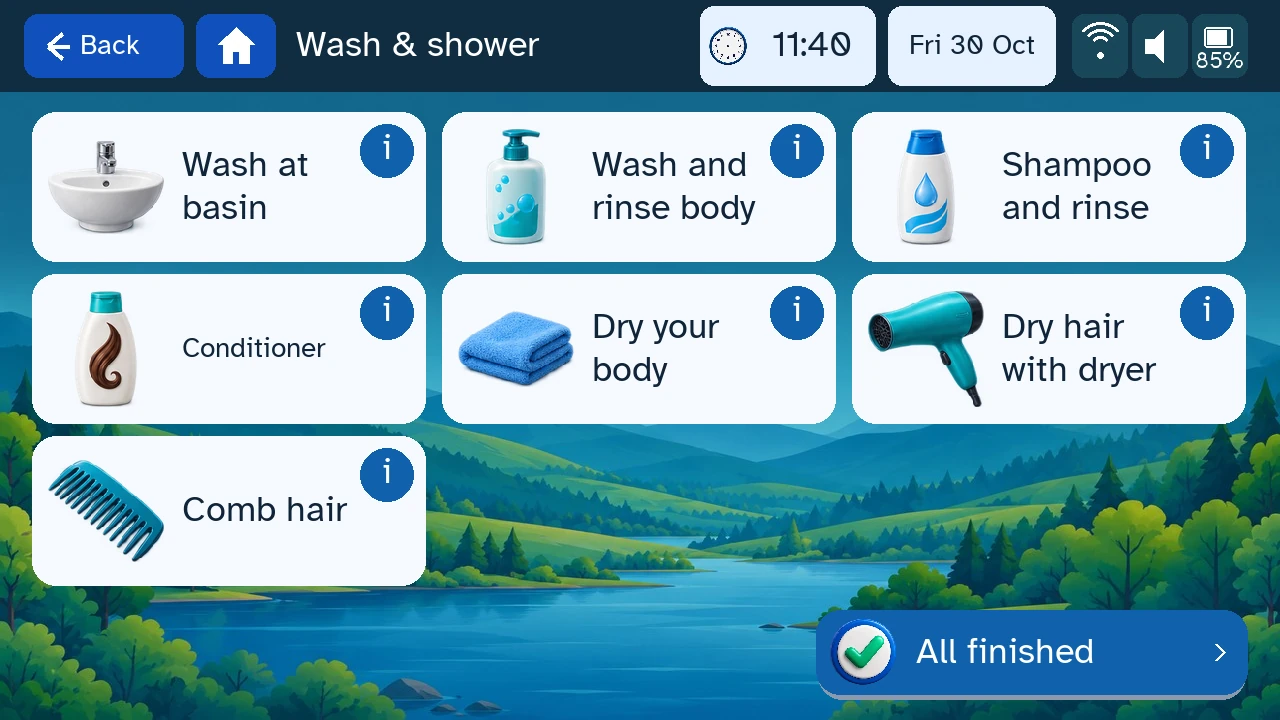
Washing, deodorant, hair care, shaving and getting ready - with visual steps that can be adapted to ability and preference.
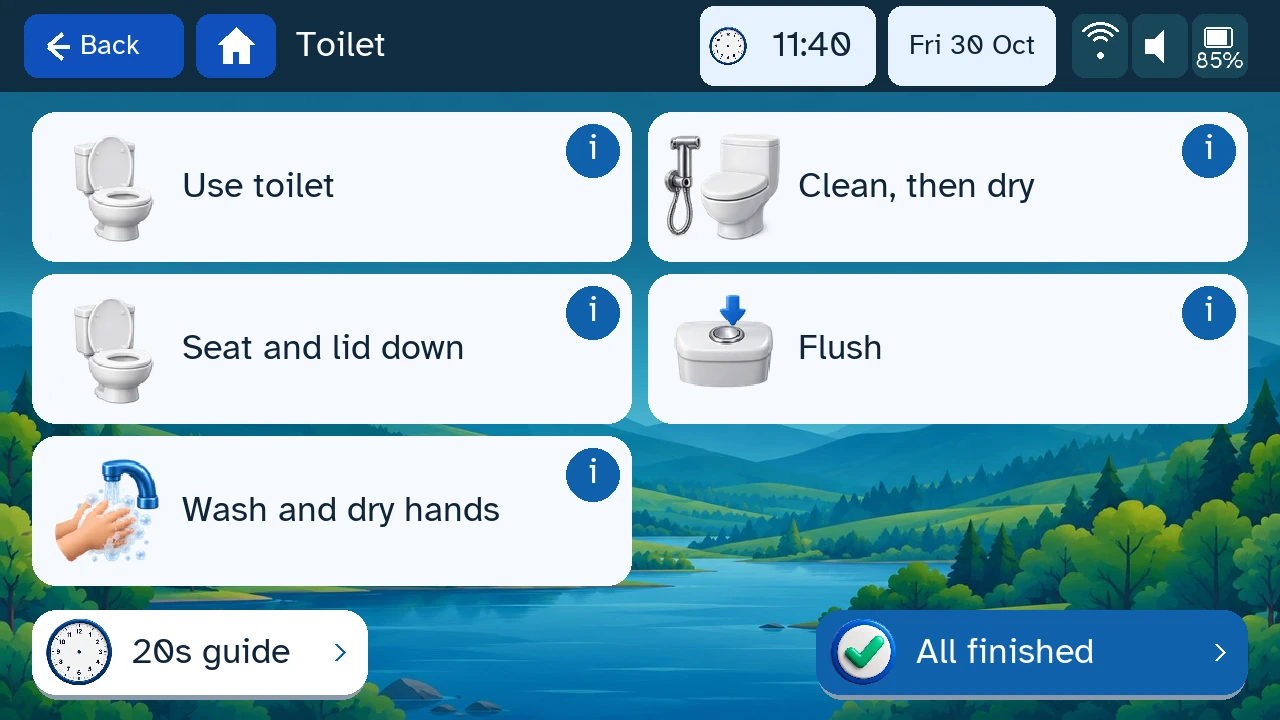
Wee and poo routines, seating, wiping, flushing and washing hands. Detail is available when it helps, without overwhelming the main screen.
Day and night cues, quiet activities, clothes and bedtime preparation help make what happens next easier to anticipate.
These can be especially difficult subjects to explain, remember or ask about. Buddy aims to make the information approachable, matter-of-fact and personal - without stigma or childish language.
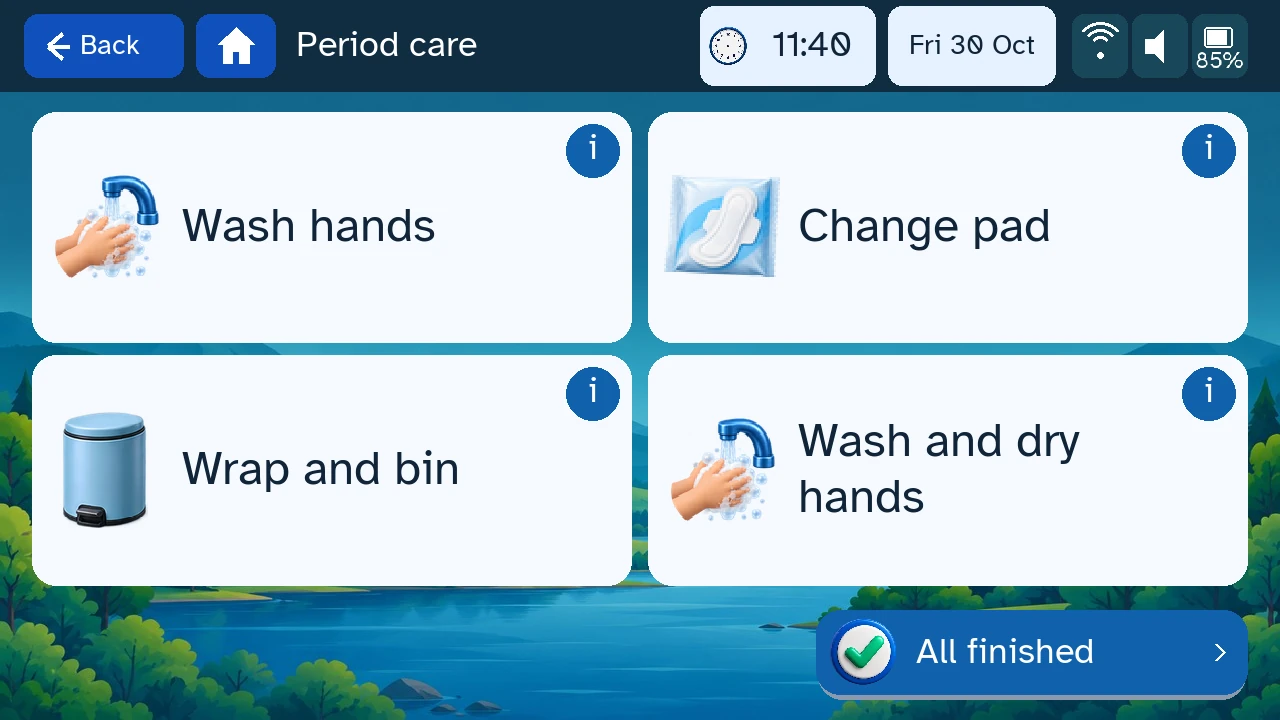
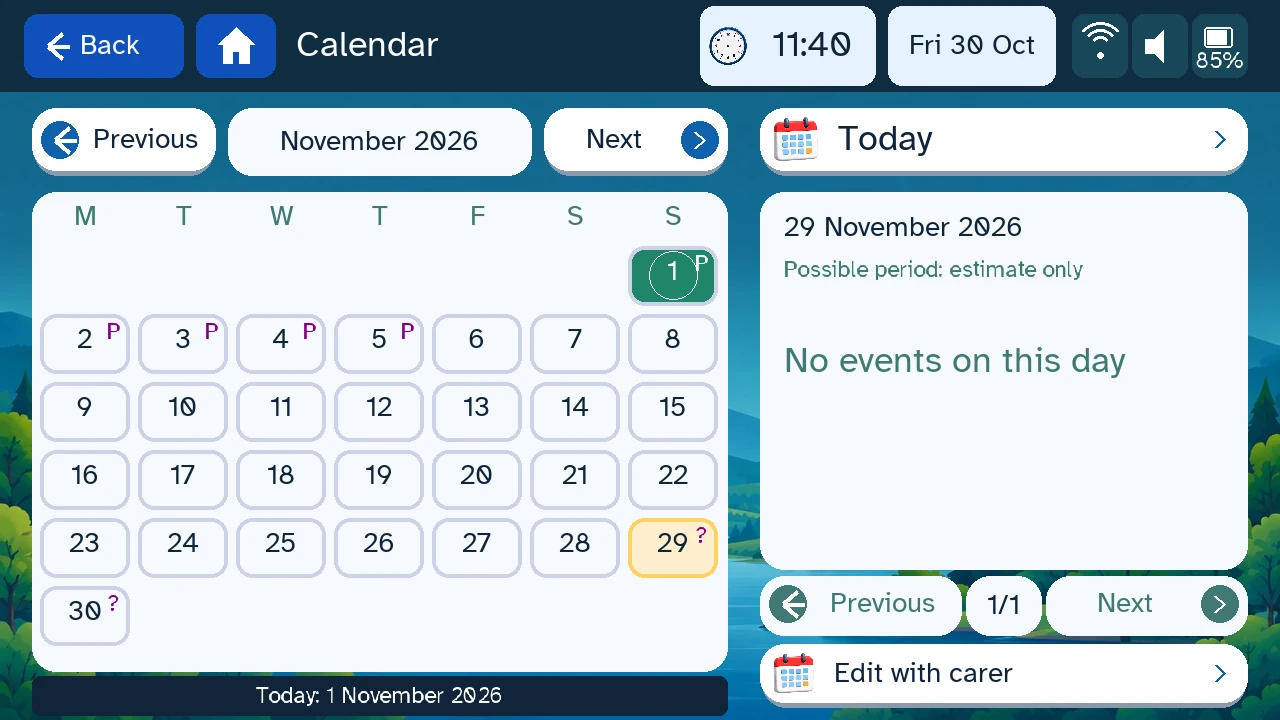
Development flows include period products such as pads, tampons, cups and period underwear, with illustrated hygiene sequences and a period calendar showing estimated dates.
The aim is to support practical understanding and personal dignity, not to replace health education or professional guidance.
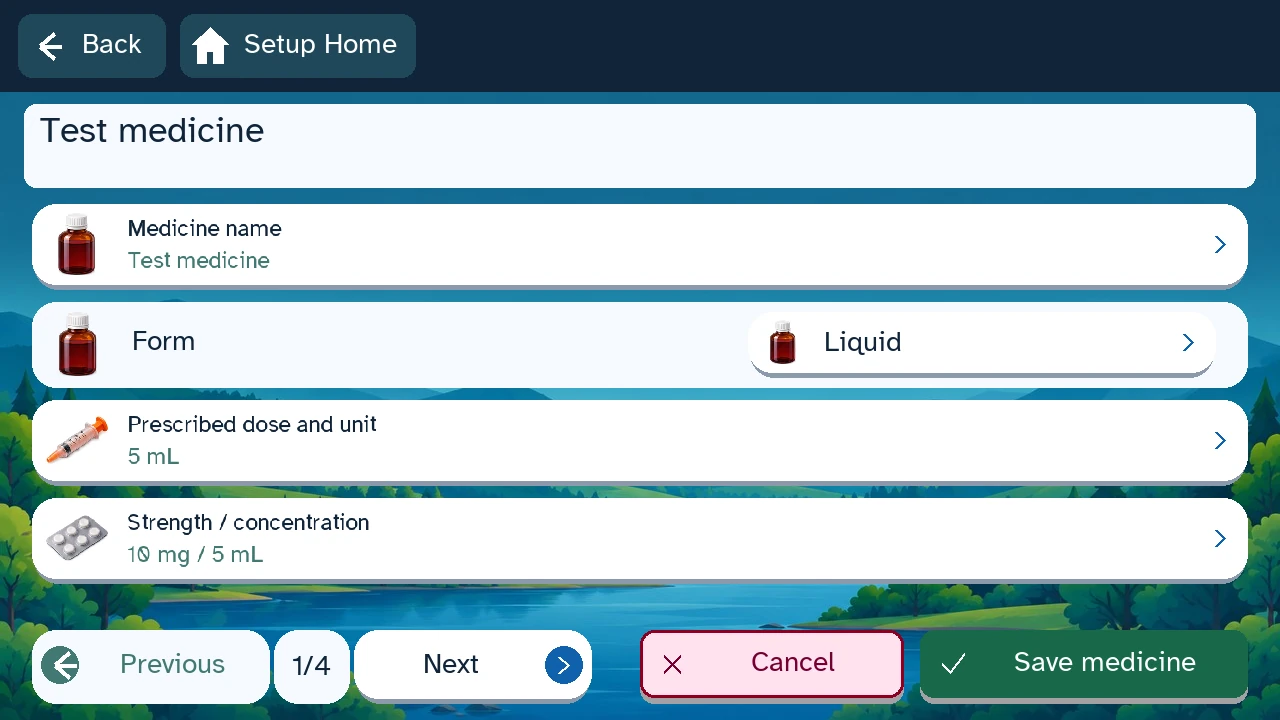
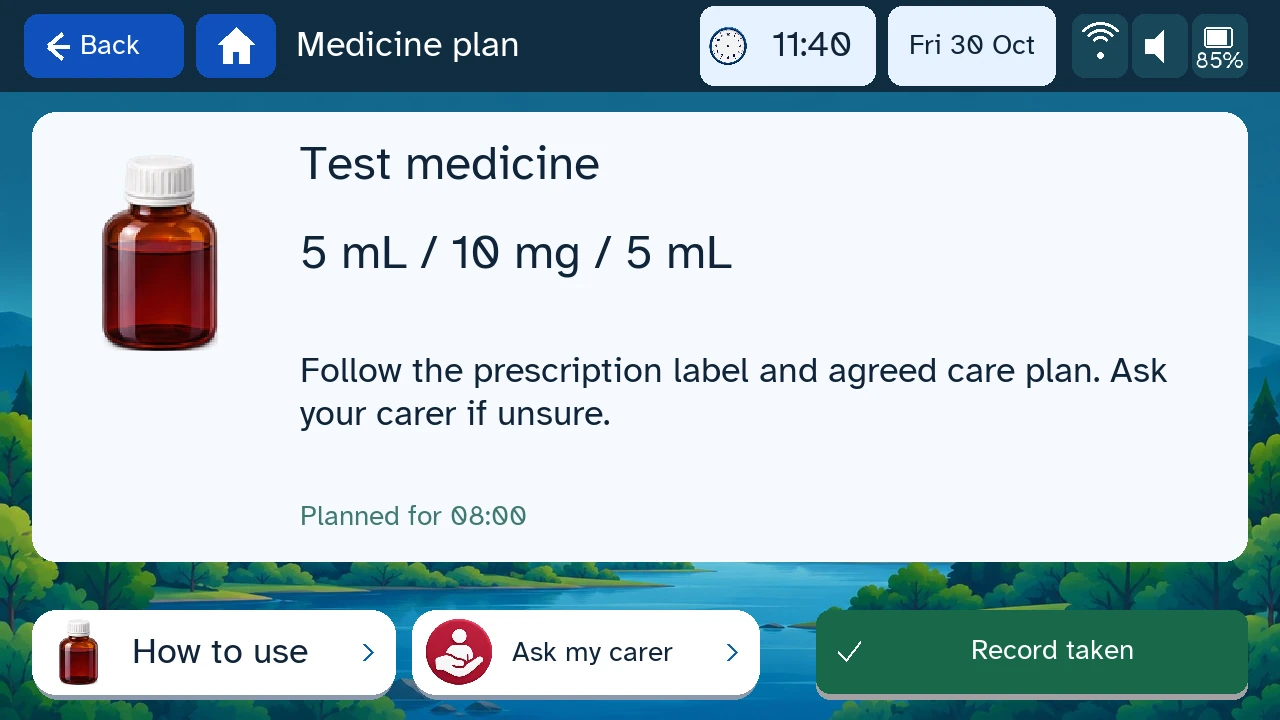
A carer can configure medicine names, times and prescribed instructions for on-screen plans and time-based cues. Keeping medicines visible alongside the rest of the day may help with routine and communication.
Important: Buddy is not a medication-prescribing, clinical decision or guaranteed alarm service. A displayed prompt does not confirm a dose was taken.
Buddy is being developed around visual understanding, personal preferences and communication options - alongside approachable day and night views.
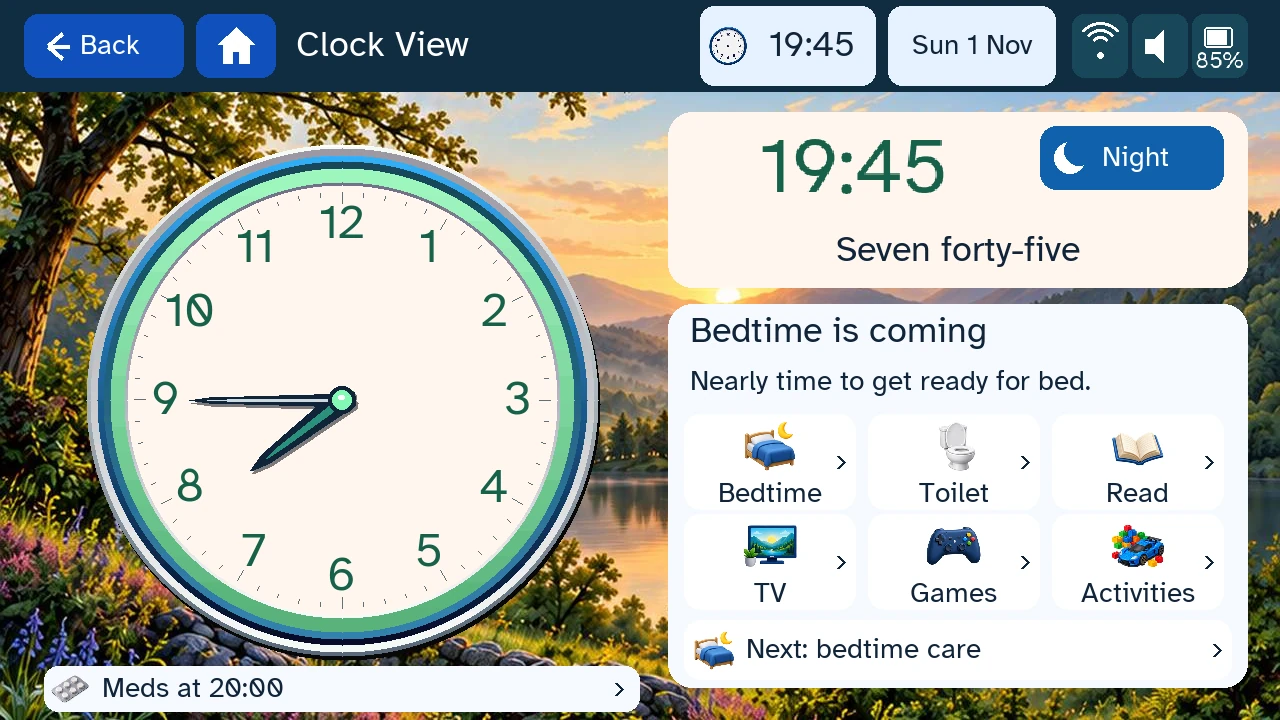
Different phases of the day, readable clocks, quiet-time prompts and upcoming events provide the context behind a schedule.
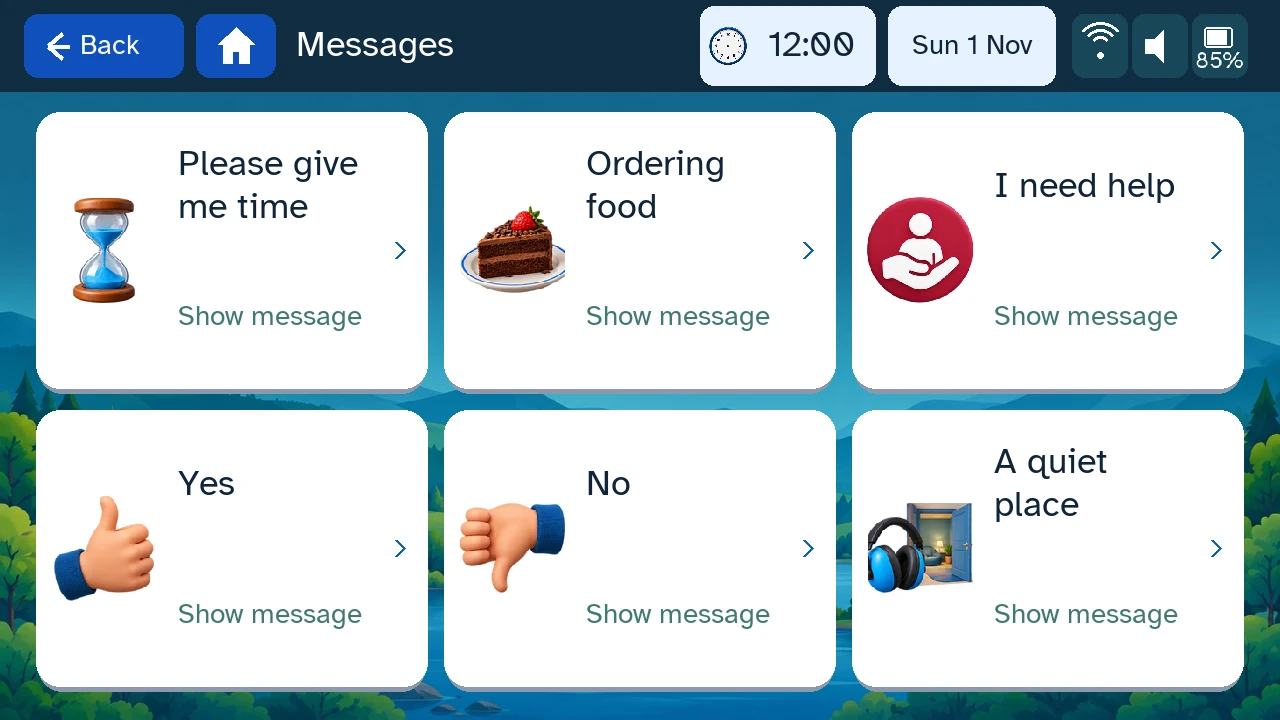
Illustrated messages, selectable phrases and optional personal recordings create more ways to communicate preferences and requests.
Activities, food, clothes, interests and artwork can be selected for the person - including choices that feel right for older children and adults.
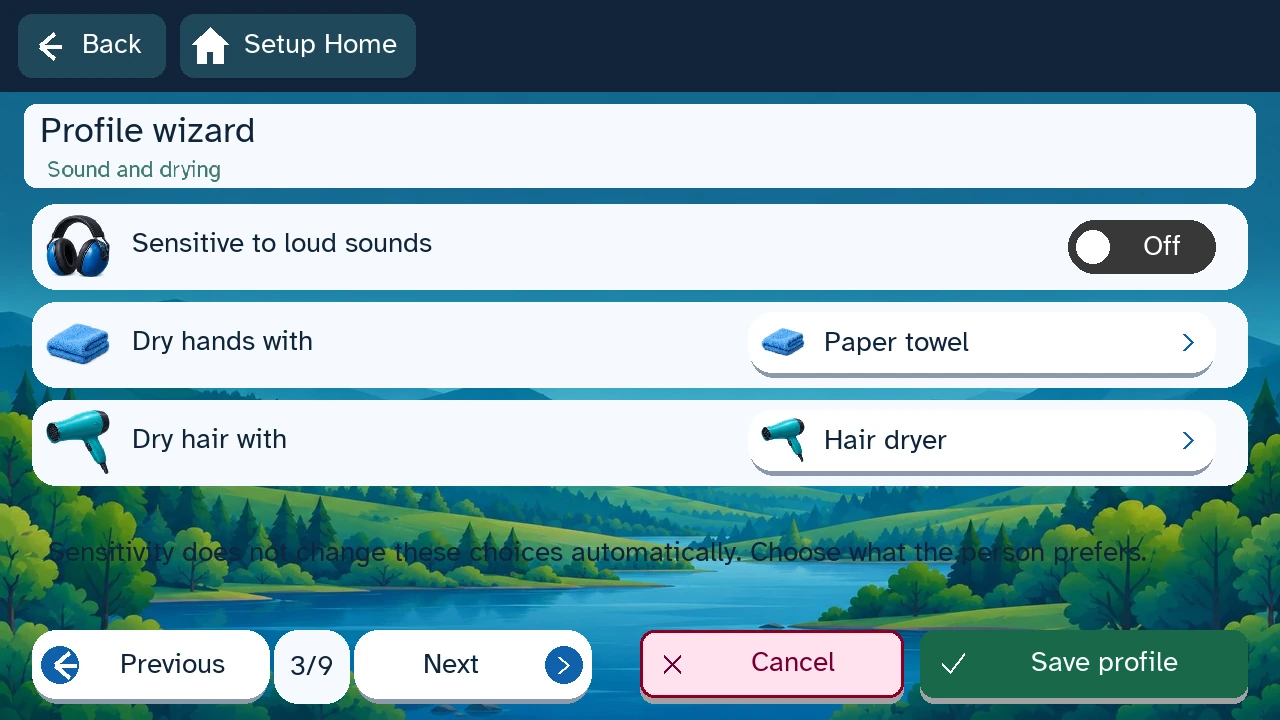
Buddy's developing on-device profile wizard gathers a more thoughtful picture than a name and an age: sensory preferences, interests, things that are difficult, helpful supports and personal goals.
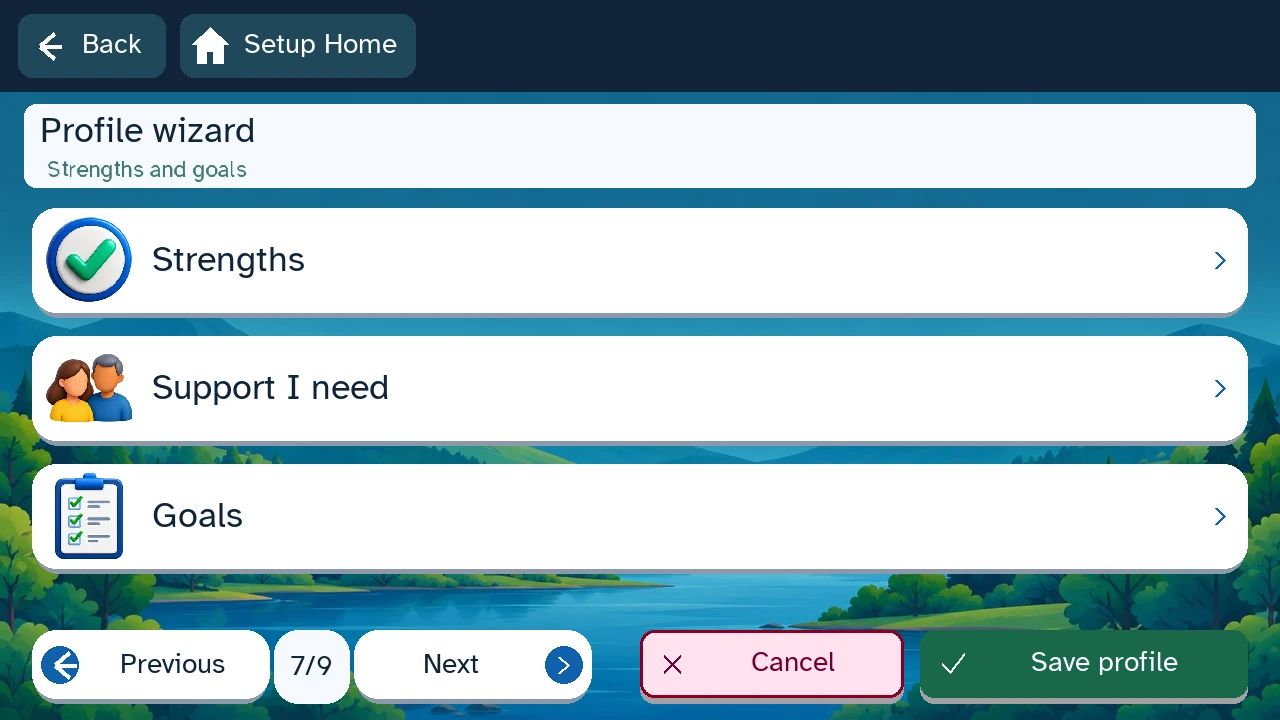
With appropriate consent, permissions and safeguarding, future work could organise observations and preferences into useful summaries for parents, carers, teachers and professionals - potentially supporting conversations around EHCP reviews or assessment preparation. Professional sharing, structured EHCP reports and autism-assessment exports are not implemented features. Buddy cannot diagnose autism or replace a qualified professional.
Buddy is an active, on-device prototype using the M5Stack Tab5 touch-screen platform. Its interface, illustrated routines and configuration flows are being developed iteratively and tested in realistic daily scenarios.
Readable typography, clear choices, reduced-motion considerations and adaptable levels of help are design priorities. There is currently no claim of clinical validation, medical-device approval, accessibility certification or independently measured outcomes.
Working prototype. Not commercially available.
The screens are actual development UI captures, not photographs of a released product. Scheduling, illustrations, flows and future professional tools may change as Buddy develops. Ambi remains a potential future naming direction.
Buddy supports daily living as a developing assistive concept; it does not replace clinical, educational or caring professionals.
We welcome conversations about accessibility, daily living, carers' needs and sensible ways to shape the next stage of development. Or subscribe to Buddy's occasional updates.